
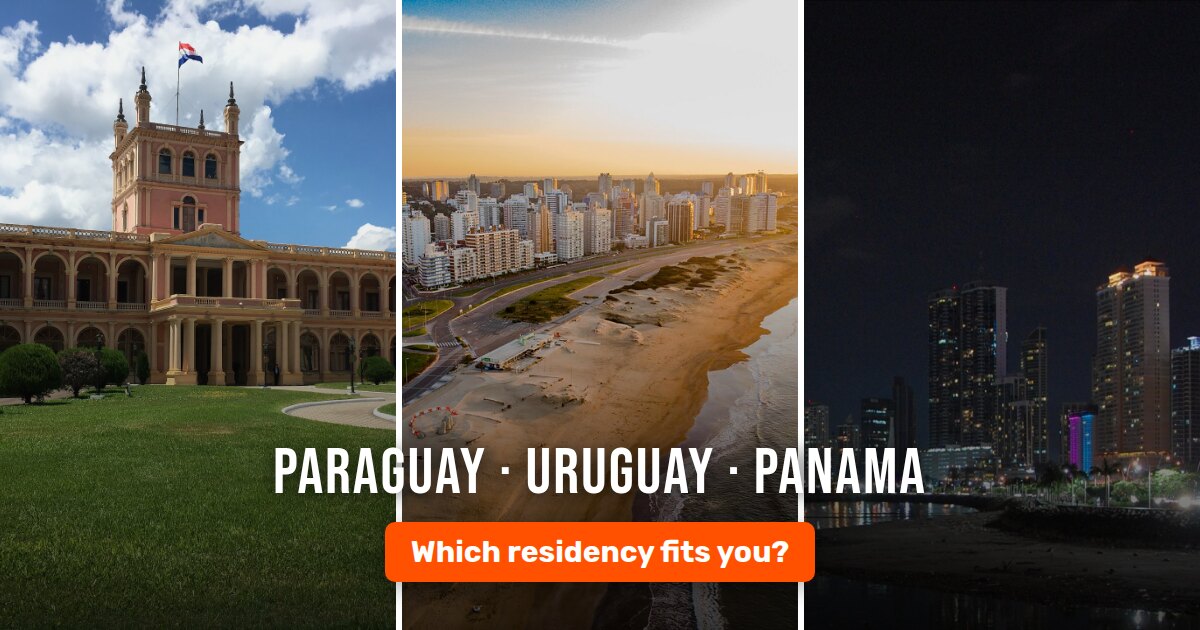
We move people to three countries in Latin America: Paraguay, Uruguay and Panama. All three leave most foreign income untaxed, all three give an EU citizen permanent residency, and all three appear on every “plan B” list on the internet. So the question we hear most is which one.
Paraguay is the residency you hold, Uruguay is the one you live in, and Panama is the one you live in if you want the sea, the mountains and the dollar. Paraguay is the only one of the three where you can become a tax resident without moving there or investing millions. Uruguay is probably the freest country on earth to live in, and you can go straight to permanent residency. Panama has the best Bitcoin scene in the region and a landscape the other two can’t match, but unless you invest, it makes you go through a temporary stage first, and its tax residency expects you to be there.
Short on time? Take the 13-question residency quiz and it will tell you how well each country fits you, in percent.
Laws, fees and thresholds below were verified in September 2026, including Uruguay’s new tax-holiday rules (Ley 20.446, in force since 1 January 2026) and Panama’s new Qualified Investor decree (in force since 16 September 2026).
What is in here
- Which one is yours
- Residency is not tax residency
- Paraguay, in detail
- Uruguay, in detail
- Panama, in detail
- Citizenship and a second passport
- Families and school
- What it costs to live there
- Health care and safety
- Why some clients take two
- When none of them is right
- Questions we get
- The whole comparison in one table
Which one is yours
Most people recognise themselves in one of these lines.
- You travel most of the year and want a tax home that doesn’t make you sit still: Paraguay. Nothing else on this list gives you tax residency without months of presence or a large investment.
- You want a second home in a calm, liberal, European-feeling country and you will spend real time there: Uruguay.
- You want to live by the sea, in dollars, among other Bitcoiners, and you don’t mind a two-step process: Panama.
- You have kids and want a backup that asks nothing of them: Paraguay.
- Your budget is tight: Paraguay again. Asunción is roughly 35 to 40% cheaper than Montevideo or Panama City.
- You would rather pay than wait: Paraguay’s Investor Pass gives permanent residency directly from USD 70,000, Panama’s Qualified Investor route from USD 300,000 in new-build property.
Residency is not tax residency
A residency permit lets you live in a country. Tax residency decides which country taxes your income. The two are granted by different offices under different laws, and holding the first does not give you the second.
All three countries are “territorial”: they tax income earned inside the country and leave foreign income from work alone, at least for individuals. Uruguay is the partial exception: it taxes residents’ foreign dividends, interest and capital gains, as the Uruguay section explains. That only helps you if you are a tax resident there, and if your home country agrees that you have left. The EU state you are leaving will apply its own rules (registered permanent residence, a home, 183 days), and none of the three has a full double-tax treaty with Slovakia or Czechia that would settle a dispute. Every plan therefore has two halves. You become tax resident in the new country, and you properly leave the old one.
How you become tax resident differs a lot:
- Paraguay: Decreto 3181/2019 makes you a tax resident once you hold permanent residency, with no day count. In practice the tax office (DNIT) also issues residency certificates to temporary residents who have a tax ID and file returns.
- Uruguay: more than 183 days a year, or your main economic base or centre of vital interests in Uruguay, or property worth over about USD 580,000 plus 60 days a year, or property over about USD 2.5 million with no presence at all.
- Panama: more than 183 days in the year (or the year before), or a permanent home in Panama, which the tax office reads as your centre of vital interests and checks with your migration record plus a lease or deed.
Paraguay is the only country we know of that combines territorial taxation, tax residency with no minimum stay, and no investment or wealth threshold. Georgia’s high-net-worth route also asks for no days, but it needs USD 500,000 in Georgian assets and Georgia exchanges data under CRS. We went through thirteen jurisdictions for our 2026 verdict on Paraguay, and nothing else matched all three conditions.
Paraguay, in detail
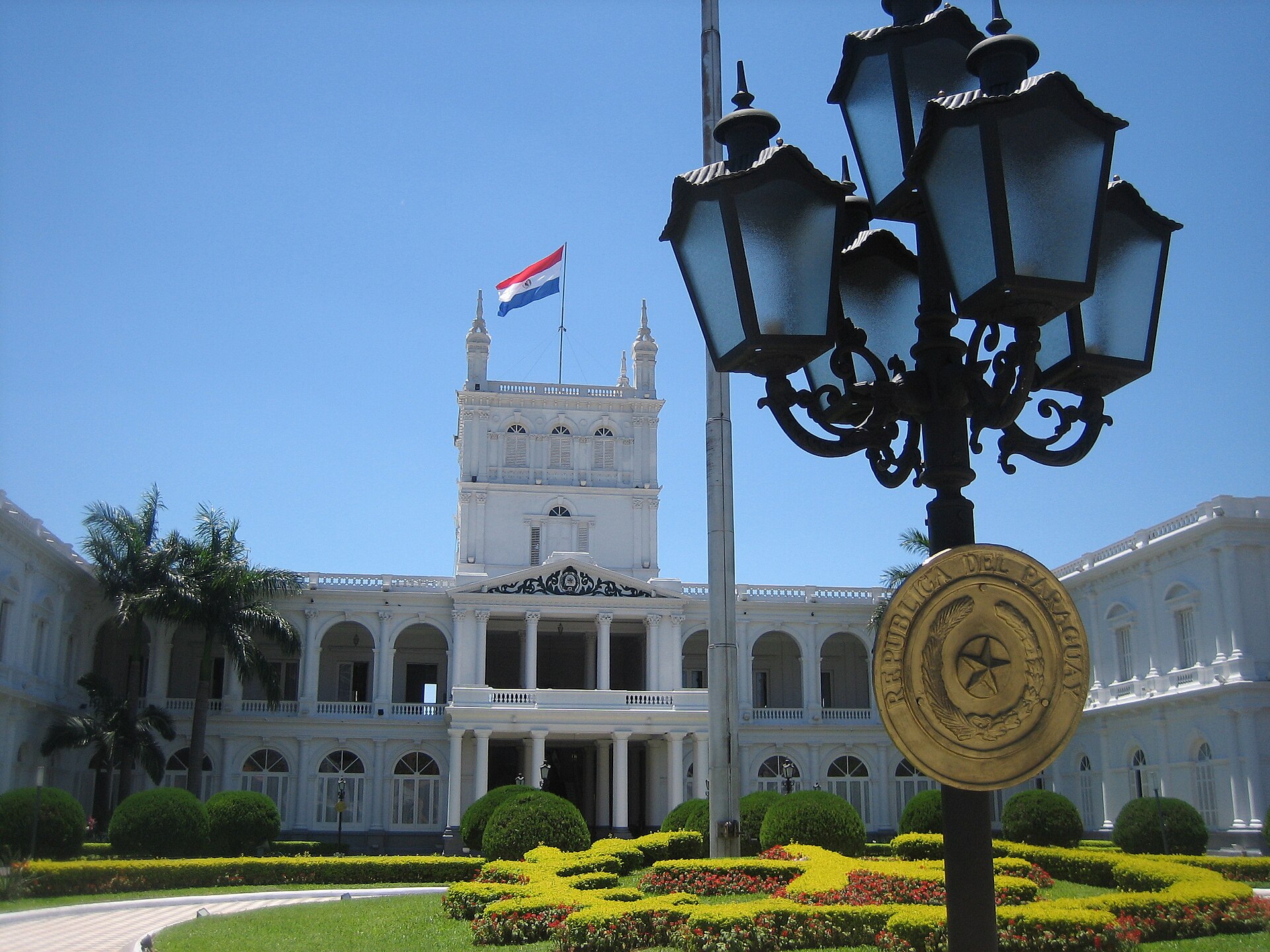
Paraguay is the cheapest of the three to live in, the easiest to hold from a distance, and the least glamorous. It has no sea, no mountains worth the name, and summers that regularly pass 35 °C. Almost nobody moves there for the scenery. People hold it because of what it does for them on paper. Getting there is simple: Air Europa flies nonstop from Madrid to Asunción every day.
The route: temporary, then permanent
Under Ley 6984/2022 an EU citizen starts with a two-year temporary residency and converts it to permanent residency in the last three months before it expires. That means at least three trips:
- Trip 1, about three working days: you file the temporary residency in person in Asunción. With our express service your fingerprints for the cédula (the national ID card) are taken on the same trip, and we collect the card for you and send it on.
- Trip 2, within the first 12 months: a mandatory re-entry. Any length of stay counts. It is also a good moment for a SIM card and a bank account.
- Trip 3, in months 21 to 24: you file the change to permanent residency, in person.
So permanent residency takes about two years from your first trip.
Since 6 July 2026 (Resolución DNM 407/2026) the permanent stage asks you to prove economic solvency in one of twelve categories. None of them sets a minimum amount. For most of our clients that means a Paraguayan tax ID with three non-zero monthly VAT returns, or a work contract as a remote worker. We covered the details in the new conditions article. The official fee is ₲2,926,925 (about USD 494) for each of the two stages.
If you have the money, the Investor Pass (Resolución MIC 0283/2026) skips the temporary stage and gives you permanent residency directly, from USD 70,000 in a business. The four tracks are explained here.
Keeping it
A permanent resident has to enter Paraguay once every three years. Since August 2026 the migration office runs six-monthly sweeps of the border records and cancels residencies that miss the limit, so this is no longer a rule you can ignore. You can ask for one extra year in advance. How the absence rules work.
Tax: foreign income stays untaxed, no day count
Paraguay taxes only Paraguayan-source income (Ley 6380/2019). Your foreign salary, dividends, interest and crypto gains are outside the personal income tax. Local income pays 8 to 10%. Work you do from abroad for a Paraguayan taxpayer is the exception and counts as Paraguayan income.
The tax residency certificate is issued by DNIT within ten business days and is valid for a year. No law sets a minimum stay for it, but DNIT asks for your migration record for the year, so you need at least some entries in that year. You have to ask for it.
What we can do while you are somewhere else
This is Paraguay’s real edge over the other two, and it is mostly practical rather than legal.
- Tax ID (RUC): we register it for you remotely, already during your temporary residency. It needs only your cédula.
- Driving licence: we can apply for the Paraguayan licence for you on the basis of your cédula without you being in the country, but that takes longer. We recommend doing it on site with our partner Gustavo, who books everything in advance, and then it is done in one day. It is valid for five years and Paraguay is a party to the 1949 Geneva road traffic convention.
- Bank account: a basic account at Sudameris opens remotely on the cédula alone. ueno and Itaú open in their apps but need a Paraguayan phone number, and the eSIM for that can also be ordered remotely. A full account needs proof of income. Use the account regularly, too: Paraguayan banks block accounts with no activity for about three months, and at many banks a single deposit reactivates them.
In Uruguay each of these three things means a trip. In Panama so does everything except a basic bank account, and even that only once you hold a Panamanian cédula.
The caveat: CRS is coming
Paraguay does not exchange bank data under CRS today and has not signed the multilateral agreement. It has told the OECD it will start first exchanges by 2028, voluntarily. Commitments like this have slipped before, but you should plan as if it will happen. Uruguay and Panama have both exchanged since 2018, so on this point Paraguay is still ahead, only for less long than it used to be.
Uruguay, in detail
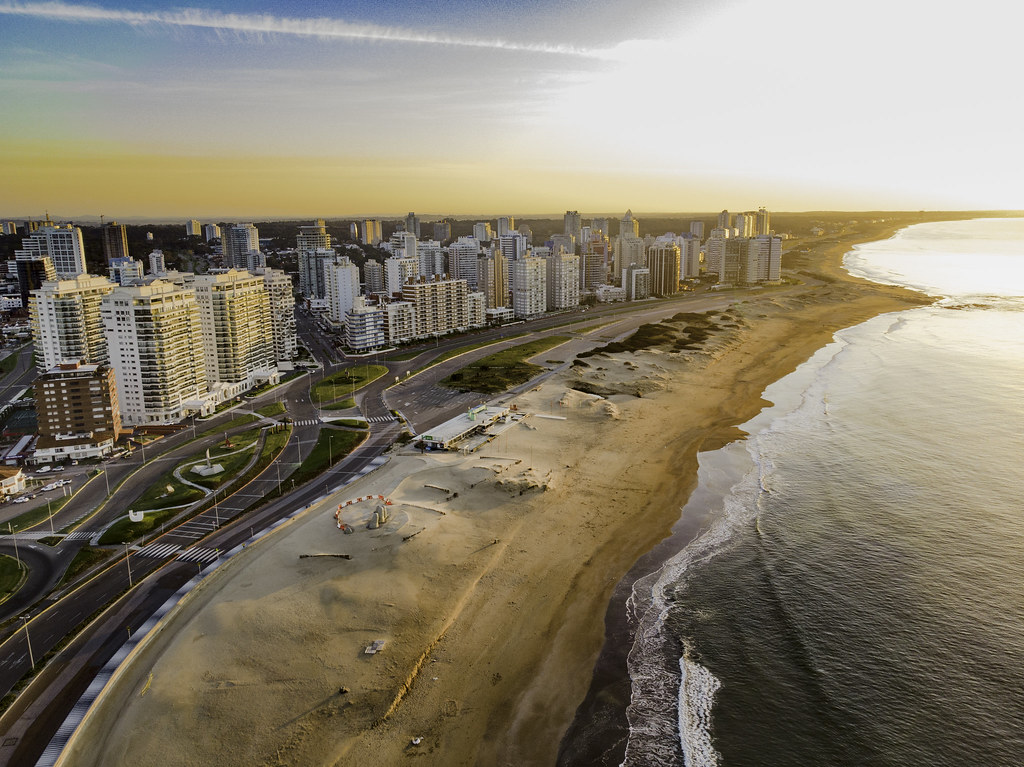
Uruguay is a country for rich hippies, and we mean that as a compliment. It is stable, clean, well run and very liberal, it has an Atlantic coast, and its summers are pleasant rather than punishing. It is also the most expensive of the three to live in.
The route: straight to permanent
This is Uruguay’s big procedural advantage. Ley 18.250 (art. 32) lets a foreigner who intends to settle apply for permanent residency directly, with no temporary stage first. The file needs a criminal record from your home country, apostilled and translated, a health card (carné de salud) and vaccination certificate done at a Uruguayan clinic, and proof of means of living. The rules set no fixed minimum; we work with about USD 1,200 a month. The official fee is UI 557.30, about USD 92.
Filing takes one working week in Uruguay, and in our experience the approval comes within about three months. After filing you get a cédula marked “residencia en trámite” and can come and go on a re-entry permit. The definitive cédula follows once your foreign birth certificate has been registered in the Uruguayan civil registry, which can take one to two years. That is the second trip. Our step-by-step guide to the direct route.
The permanent residency itself has no expiry date. The cédula does. It is valid until the date printed on it, usually three years, and renewing it takes a short visit. The only presence rule is not to stay away for more than three years in a row. After that the Ministry of the Interior may cancel the residency (art. 47 C). It is not automatic, but don’t test it.
Tax: residency is possible, the holiday now costs more
Uruguay taxes local income and has long taxed residents’ foreign dividends and interest at 12%. What made it attractive was the tax holiday for new residents: the year you arrive plus ten more, eleven years in total, with no tax on foreign passive income.
That changed on 1 January 2026. Under the budget law Ley 20.446, anyone who becomes a Uruguayan tax resident from 2026 gets the holiday only if they:
- spend more than 183 days a year in Uruguay, or
- buy urban property worth more than UI 12.5 million, about USD 2.1 million, or
- put at least UI 625,000 (about USD 104,000) a year into approved investment funds.
The same law extended the 12% tax to foreign capital gains and foreign rental income, and closed the old option of paying a reduced 7% forever. People who became resident before 2026 keep their old terms.
To get Uruguay’s eleven-year holiday without living there most of the year, you now need about USD 2 million in property. You can still become tax resident with property over about USD 580,000 plus 60 days a year, but then your foreign dividends, interest and capital gains pay 12%. Foreign active income, such as a salary for work done abroad, stays outside the tax either way.
For a digital nomad that makes Uruguay a place to live rather than a tax base. The tax residency certificate can be requested online, but you have to prove the days, so without presence (or USD 2.5 million of property) there is nothing to certify.
Driving licence: in person, in Montevideo
You convert your foreign licence at the Intendencia with a Uruguayan cédula (the “en trámite” one is enough) and a medical exam at an authorised clinic, and you bring a certificate of your licence’s history from the authority that issued it, apostilled and translated. There is no way to do this from abroad. How we did it, step by step. Uruguay is a party to the 1968 Vienna convention, Paraguay to the 1949 Geneva one, so the two licences cover different countries and complement each other.
The freest country we know
If personal freedom is what you are after, nothing in Latin America comes close, and very little outside it:
- Cannabis is legal (Ley 19.172, 2013). You can buy it in a pharmacy, up to 40 g a month, once you are registered. Registration needs citizenship or permanent residency, and the “en trámite” cédula is not accepted.
- Possession of drugs for personal use is not a crime, and for cannabis the law presumes that up to 40 g is for personal use.
- Same-sex marriage has been legal since 2013 (Ley 19.075), and joint adoption by same-sex couples since 2009.
- Euthanasia became legal with Ley 20.431 in October 2025, for citizens and permanent residents.
- Sex work is legal for registered workers with a health card (Ley 17.515), and abortion is available on request up to 12 weeks (Ley 18.987), for foreigners after at least a year of residence.
Weather and sea
Montevideo’s summer highs sit around 28 °C, about six degrees below Asunción, and the Atlantic beaches from Punta del Este eastwards are proper ocean beaches. Winter is the part the brochures skip. In July the average high is about 15 °C, it is humid, windy and often grey. Uruguay’s good season runs from November to April. From Europe, Iberia and Air Europa fly nonstop from Madrid to Montevideo.
Panama, in detail
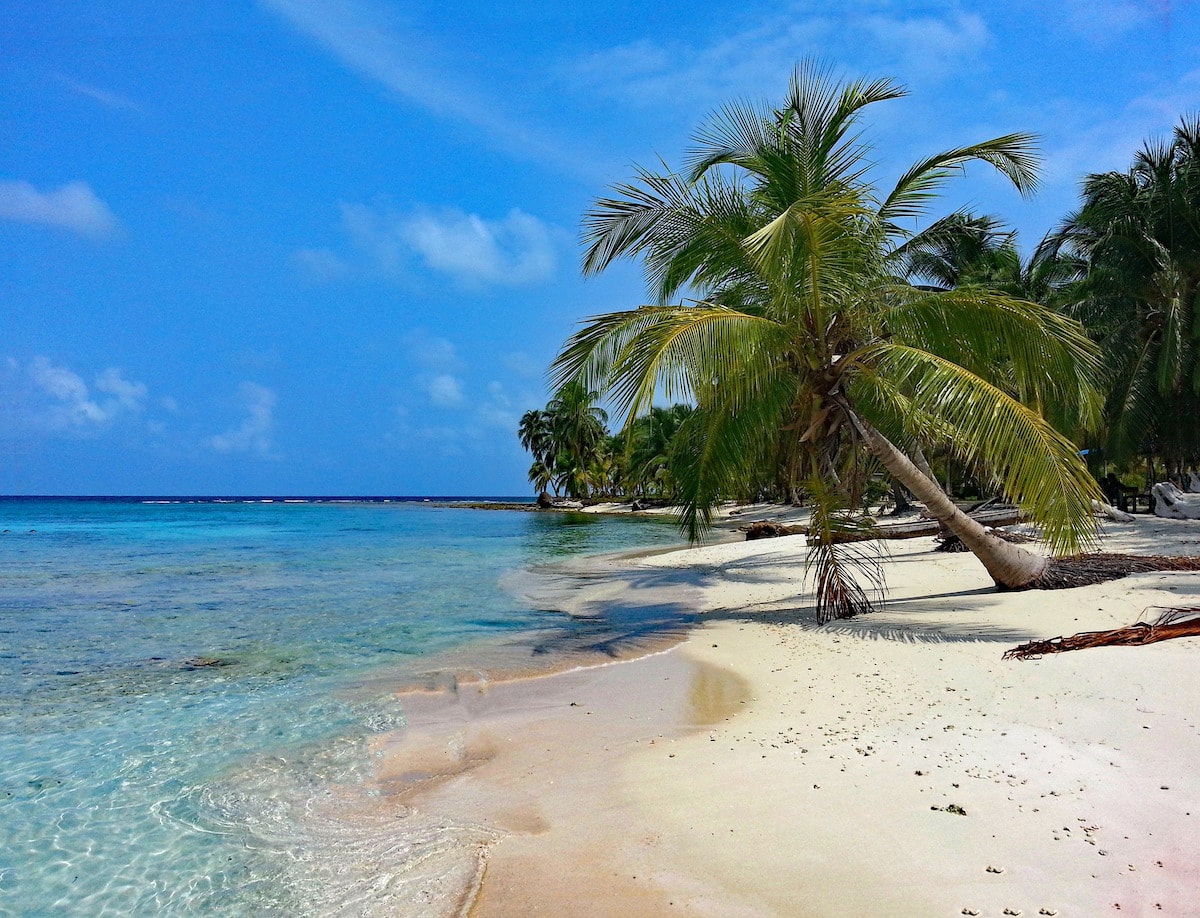
Panama is the one with everything the other two lack: two oceans, islands like San Blas and Bocas del Toro, cool highlands around Boquete and a 3,474-metre volcano, and the US dollar as its currency. Panama City is the Dubai of Latin America. Iberia, Air Europa, Air France, KLM and Turkish Airlines fly there nonstop from Europe, and Copa connects it to about 85 destinations across the Americas, so the required visits fit easily into other travel.
The route we use: Friendly Nations, via a work contract
Slovakia and Czechia are on Panama’s Friendly Nations list. That visa (Decreto Ejecutivo 226/2021) needs one tie to Panama: a job with a Panamanian employer, property worth USD 200,000, or a USD 200,000 fixed deposit for three years. Most of our clients take the job. We arrange an employment contract with a Panamanian company, at a salary of at least USD 850 a month (we recommend 1,000).
Friendly Nations is a two-step process. You get a provisional residency for two years first, then apply for permanent residency. That works out to four trips and, end to end, about two and a half to three years:
- About 5 working days to file the temporary residency, and about 2 days to collect the card once it is approved.
- About 5 working days in months 21 to 24 to file for permanent residency, and about 2 days to collect the permanent card.
Families also need a Panamanian bank account holding USD 5,000 for the bank letter the migration office asks for. Every application is filed by a Panamanian lawyer under a notarised power of attorney. Once you are permanent, you lose the status after more than two years’ continuous absence, so plan a visit at least every two years. The full Panama process is described here.
The fast track, if you have the money
Panama’s Qualified Investor route gives permanent residency directly, with no provisional stage. The investment certificate takes about 15 business days and the migration office then decides within 30 business days of a complete file, so roughly two months. A new decree (Decreto Ejecutivo 17 of 8 September 2026, in force since 16 September) set the minimums:
- USD 300,000 for a new-build property bought from the developer,
- USD 500,000 for a resale property, for securities, or for a deposit in a state bank,
- USD 750,000 for a deposit in a private bank.
You must hold the investment for five years, and the government fees are USD 5,000 plus a USD 5,000 repatriation deposit. Few people want to put USD 300,000 to 500,000 into Panamanian property to skip two years, which is why the work-contract route is what we mostly do.
Tax: territorial, but you have to live there
Panama taxes only Panamanian-source income, and that still holds for individuals. A 2026 law (Ley 526) adds a 15% tax on foreign passive income from 2027, but only for companies that belong to multinational groups and have no real substance in Panama.
Tax residency needs more than 183 days in Panama in the year (or the year before), or a permanent home there. The tax office also wants your migration record plus a lease or deed and utility bills, so a certificate without real presence is hard to get. Registration with the tax office is online only, but a normal tax ID needs a Panamanian cédula, which you get in person, and the foreigners’ tax number is issued only if you have Panamanian income.
Panama has exchanged bank data under CRS since 2018. And it is still on the EU’s list of non-cooperative tax jurisdictions after the February 2026 update, which can trigger stricter rules in your home country’s tax law for payments to Panamanian companies. The next review is in October 2026.
Driving licence: in person at Sertracen
The Panamanian licence has to be done physically in Panama. You register with Sertracen, and it can be issued on the basis of your foreign licence, which has to be apostilled, translated into Spanish, and the translation apostilled too. The hearing and vision tests are still done in person at the branch, and you need a blood-type certificate from an authorised lab.
Banks and Bitcoin
Opening a Panamanian bank account as a newcomer is slow and paperwork-heavy: reference letters, proof of income and source of funds, all in Spanish, and usually in person. Once you have a Panamanian cédula it gets much easier, and a basic account can then be opened remotely.
The Bitcoin and crypto scene, on the other hand, is the best of the three by a distance. Since April 2025 Panama City accepts bitcoin, ether, USDC and USDT for city taxes, fees and permits (the bank converts them to dollars). There is a yearly Panama Blockchain Week, a Bitcoin meetup, crypto-friendly Towerbank, and services like Lulubit that turn USDT into dollars in a local account. Panama has no crypto law yet: a 2022 bill was vetoed and its successor is stuck in committee. Crypto is legal and unregulated.
Freedoms
Panama is liberal economically and conservative socially. Same-sex marriage is not recognised (the Supreme Court confirmed this in 2023), and cannabis is legal for medical use only, with the first pharmacy opening in January 2026.
Citizenship and a second passport
Residency is the first step. For many of our clients the real prize is a second passport, and here the order flips. Uruguay is the easiest, Paraguay the hardest.
- Uruguay: legal citizenship after 3 years of habitual residence if your family lives in Uruguay with you, 5 years without it (Constitution art. 75). It is an administrative process at the Electoral Court, free, with no exam and no renunciation of your current passport. You do have to live there, though. An absence of more than six months in a row restarts the count, and you prove local means of living and bring witnesses. Since April 2025 the passport of a legal citizen shows URY like any other Uruguayan passport. It opens 156 countries without a visa.
- Panama: 5 years after permanent residency, so about 7 years via Friendly Nations, then a Spanish and civics test, an interview and a discretionary decision. You must also sign a sworn, irrevocable renunciation of your other nationality. The passport opens 147 countries.
- Paraguay: the 3 years in the constitution start only on the day your permanent residency is granted, so it is about 5 years from your first trip. You then petition the Supreme Court through a lawyer, prove work or business in Paraguay and pass a written exam on Paraguayan history, geography and civics. Few people get through. The court swore in 7 new citizens in November 2025. Paraguay recognises dual nationality only with Spain and Italy. The passport opens 145 countries.
Slovak readers should know one more rule. Since April 2022 (Act 72/2022) a Slovak who takes another citizenship keeps the Slovak one only if, at that moment, they had held legal residence in the new country for at least five years and actually lived there. That applies to all three countries. Uruguay’s 3-year route would cost you your Slovak passport, and a Paraguayan residency held on paper while you live elsewhere would not count either. Czechs have been free to hold dual citizenship since 2014.
Mercosur on your ID card
Paraguay and Uruguay are full members of Mercosur. With a permanent-residency cédula from either, you can cross into Argentina and the other member states on the card alone, provided your own nationality needs no visa there, which is the case for EU citizens. Argentina’s official list confirms this only for permanent residents, so don’t rely on it with a temporary cédula. The easy Mercosur residence agreement, which lets you settle in the other member states, is for citizens only, another reason the passport matters. Panama became an associate state in December 2024 but gives you none of this.
Families and school
School is compulsory on paper in all three countries: from age 4 in Uruguay, roughly 4 or 5 to 15 in Panama, and for nine years of basic education in Paraguay. None of the three migration offices asks for a school certificate for a child, either at application or at renewal. The difference is what happens if your family lives there.
- Paraguay: homeschooling is simply not regulated. Children are their own residency category, need no proof of income, and nothing in the process ever asks where they go to school. For a family that lives in Europe and keeps Paraguay as a backup, nobody asks.
- Uruguay: education is compulsory from age 4, and the public education authority (ANEP) treats that as attendance at an approved school. In 2024 it filed a criminal complaint against parents who kept their children out of school. Homeschooling is a legal grey zone with a hostile administration.
- Panama: homeschooling is legal since Ley 245/2021, but only through schools designated by the education ministry, with annual evaluations, and it is still a pilot.
So for families with children, Paraguay is the best backup plan we know. We wrote a whole piece on it: From Family Plan B to Full Opt-Out.
What it costs to live there
Numbeo figures from August and September 2026, in US dollars, excluding rent unless stated.
| Asunción | Montevideo | Panama City | |
|---|---|---|---|
| Single person, per month | 594 | 978 | 846 |
| Family of four, per month | 2,223 | 3,522 | 3,078 |
| 1-bedroom flat, city centre | 616 | 737 | 1,315 |
| Cost of living index (New York = 100) | 34.9 | 56.7 | 49.2 |
Montevideo costs about 1.6 times as much as Asunción and is priced like Bratislava or Prague. Eating out, utilities and transport are closer to double. Panama City costs about the same as Montevideo overall, with cheaper restaurants and much more expensive rent. Asunción’s figures come from a thin sample, but they match what our clients report.
Health care and safety
Uruguay has the best public health system of the three. Patients there pay 17% of health spending out of their own pocket, against 36% in Paraguay and 40% in Panama (World Bank). Our clients rarely use public care anywhere. They go to the best private hospital in the capital, and in their experience those beat most hospitals in Slovakia or Czechia: Hospital Punta Pacífica in Panama City is affiliated with Johns Hopkins and holds JCI accreditation, Sanatorio La Costa in Asunción is accredited by Argentina’s ITAES, and Montevideo has the Hospital Británico. Private cover costs roughly USD 50 to 150 a month in Uruguay, 80 to 300 in Paraguay and 50 to 200 in Panama, depending on age and plan.
On safety the picture is less obvious than the reputations suggest. Uruguay ranks best of the three in the Global Peace Index 2026 (43rd), Paraguay 64th and Panama 81st. Yet Paraguay had the lowest murder rate in 2025, 6.1 per 100,000 people, against 10.3 in Uruguay and 12.9 in Panama (InSight Crime).
Why some clients take two
The three countries don’t really compete. They do different jobs, and the combinations make sense:
- Paraguay + Uruguay: Paraguay as the tax home you don’t have to sit in, Uruguay as the place where you spend the southern summer. The two are neighbours, and with a permanent-residency cédula you cross between them without a passport.
- Paraguay + Panama: the same tax logic, with Panama as the tropical base, the dollar account and the crypto community.
If you take two residencies with us at the same time, you get 5% off. Just tell us which two when you get in touch.
When none of them is right
If you want tax residency without a day count and you also need an account that stays outside CRS, Paraguay will do the first part only until its exchanges begin. For banking privacy we open accounts in Georgia and Kyrgyzstan, which is a separate question from where you live.
If you plan to stay in one EU country and keep your home, your family and your income there, a Latin American residency changes nothing about your taxes. It is still a good plan B, but it is not a tax plan.
Questions we get
Which country gives tax residency without living there?
Paraguay. Its law makes you a tax resident from permanent residency on, with no minimum stay and no investment threshold. Uruguay needs 183 days, property over about USD 580,000 plus 60 days a year, or property worth about USD 2.5 million with no presence at all. Panama needs 183 days or a permanent home there.
Can I get permanent residency in Uruguay directly?
Yes. Ley 18.250 lets you apply for permanent residency without a temporary stage first. You file in person in Uruguay, and the definitive cédula follows once your birth certificate is registered there.
Is Uruguay’s tax holiday still available?
For new residents since 1 January 2026, only if you spend more than 183 days a year in Uruguay, buy property worth about USD 2.1 million, or invest about USD 104,000 a year in approved funds. It lasts eleven years.
How much does Panama’s investor residency cost in 2026?
Since 16 September 2026, USD 300,000 for a new-build property from a developer, or USD 500,000 for a resale property, securities or a state-bank deposit. The Friendly Nations visa, which we use, needs only a work contract with a Panamanian company.
Can I get a driving licence without travelling?
In Paraguay, yes. We can apply for it on the basis of your cédula, but that takes longer, so we recommend one day on site with our partner, who gets it done that day. In Uruguay and Panama you have to be there in person for the medical or the vision and hearing tests.
Which country gives citizenship fastest?
Uruguay. Legal citizenship comes after 3 years of real residence with your family there, or 5 years without, with no exam and no renunciation. Panama takes about 7 years and requires renouncing your other nationality. Paraguay takes about 5 years from your first trip, an exam and a Supreme Court petition. Slovaks keep their citizenship only after five years of legal residence in which they actually lived in the new country, so for them the Uruguayan minimum is effectively five years.
Do I get a discount for two residencies?
Yes, 5% if you take two residencies with us at the same time.
The whole comparison in one table
Residency, tax and paperwork
| Paraguay | Uruguay | Panama | |
|---|---|---|---|
| Who can apply | Any nationality, no investment | Any nationality, proof of means of living | Friendly Nations list (SK, CZ and ~50 others), or investors |
| Route to permanent residency | Temporary 2 years, then permanent | Permanent directly | Provisional 2 years, then permanent (Friendly Nations) |
| Direct permanent residency with investment | Investor Pass from USD 70,000 | Not needed, the standard route is direct | Qualified Investor: USD 300,000 new-build, 500,000 resale |
| Time to permanent residency | About 2 years | Approval in about 3 months | About 2.5 to 3 years (Friendly Nations), about 2 months as an investor |
| Minimum trips to permanent residency | 3 | 1, plus 1 for the definitive cédula | 4 (work-contract route) |
| Keeping permanent residency | One entry every 3 years | No expiry; no more than 3 years away in a row; cédula renewed about every 3 years | No more than 2 years away in a row |
| Tax system for individuals | Territorial | Territorial, but 12% on foreign dividends, interest and capital gains | Territorial |
| Tax residency | No day count; by law from permanent residency, in practice we register you with DNIT already during temporary residency | 183 days, economic centre, or property + 60 days | 183 days or a permanent home |
| Tax on foreign income | 0% | 0% during an 11-year holiday (183 days or ~USD 2.1M property), then 12% on passive income | 0% |
| Local income tax | 8 to 10% | Up to 36% | Up to 25% |
| CRS bank data exchange | Not yet, committed to 2028 | Yes, since 2018 | Yes, since 2018 |
| EU tax blacklist | No | No | Yes (Feb 2026 list) |
| Tax ID from abroad | Yes, we register it, even during temporary residency | No, you have to prove days | Only with a cédula or local income |
| Driving licence from abroad | Yes, but slower; one day on site recommended | No, in person in Montevideo | No, in person at Sertracen |
| Bank account from abroad | Basic account, yes | No | Basic account only, once you hold a Panamanian cédula |
Citizenship and daily life
| Paraguay | Uruguay | Panama | |
|---|---|---|---|
| Citizenship | Hardest: 3 years after permanent residency (about 5 in total), exam and Supreme Court | Easiest: 3 years of real residence with family, 5 without; no exam, no renunciation | About 7 years; you must renounce your other nationality |
| Passport, visa-free countries | 145 | 156 | 147 |
| Mercosur travel on the cédula | Yes, with permanent residency | Yes, with permanent residency | No |
| Direct flights from Europe | Air Europa from Madrid, daily | Iberia and Air Europa from Madrid | Iberia, Air Europa, Air France, KLM, Turkish; hub for all of Latin America |
| Currency | Guaraní (₲) | Uruguayan peso | US dollar |
| Cost of living (Numbeo index, NYC = 100) | 34.9, the cheapest | 56.7, like Bratislava or Prague | 49.2 |
| Climate | Hot, summers often over 35 °C | Mild summers ~28 °C, cool grey winters | Tropical all year, cool highlands |
| Health care | Weak public system, good private sanatoriums | Best public system of the three | Top private hospital (Johns Hopkins affiliate) |
| Safety | Peace Index 64th; lowest murder rate (6.1 per 100k) | Peace Index 43rd; 10.3 per 100k | Peace Index 81st; 12.9 per 100k |
| Sea and mountains | Neither | Atlantic beaches, no mountains | Two oceans and a 3,474 m volcano |
| Personal freedoms | Socially conservative, little state interference | Cannabis, same-sex marriage, euthanasia all legal | Economically liberal, socially conservative |
| Crypto scene | Small, growing | Small | The strongest in the region |
| Children and school | Homeschooling unregulated, never checked | School compulsory from 4, homeschooling a grey zone | Homeschooling legal only via ministry schools |
| Best for | Perpetual travellers, nomads, families wanting a backup | People who want to live somewhere free and calm | People who want sea, dollars and Bitcoiners |
Slovaks keep their Slovak citizenship after naturalising only if they held legal residence in the new country for at least five years and actually lived there (Act 72/2022).
Still not sure? The residency quiz takes two minutes and ranks all three for you. Or go straight to the details: Paraguay, Uruguay, Panama.