
“Urugua” means “river snail” in the indigenous Guaraní language. “Y” means water. “Uru” means any wild bird, and “Ruguái” means “tail.” No one knows exactly (not even the Uruguayans themselves) whether Uruguay means “water of river snails” or “tail of birds” because of the Uruguay River, which spreads across the country like a giant bird’s tail. Unlike Paraguay, no one in Uruguay speaks Guaraní anymore, and the only active language in Uruguay is Spanish.
Freedom or death!
The official motto of Uruguay is “Libertad o Muerte” (Freedom or Death), and the whole country has been built on this slogan. Indeed, Uruguay is one of the freest countries globally (according to Freedom House, it has a score of 97/100). LGBT marriages or prostitution are legalized here. In 2013, Uruguay was the first country to legalize marijuana. When I asked local Uruguayans when did they decriminalize all other drugs, their answer gave me pause: “we never banned any drugs for personal consumption, so we didn’t have to decriminalize anything.”
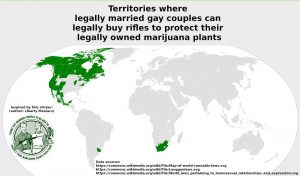
Uruguay resembles the Netherlands in its liberality and even in its architecture (and prices). A decent country where almost anything goes.
Uruguay (like Paraguay) is one of the safest countries in Latin America. It was formed by breaking away from Argentina (it has a close fraternal relationship with Argentina, sort of like the Czech Republic and Slovakia). Because it is the most developed country in Latin America, it is also commonly referred to as Latin American Switzerland. Uruguay is even a better armed civilian country than Switzerland (the 8th best-armed country globally and the best armed in Latin America).

Uruguay, like Argentina, is more European than typically Latin American. Uruguayans (direct descendants of Italians and Spaniards) certainly don’t consider themselves “Latinos.”
Uruguay is a country where there is a very strong middle class and a very peaceful life by Latin American standards.
Uruguay has long been a favourite destination if you have foreign income (from your savings or cryptocurrencies), because new tax residents could leave it untaxed for years. That’s why Uruguay has become a haven for a vast number of Argentine programmers and IT people who have moved to Uruguay because of this.
Is Uruguay or Paraguay better for me?
Uruguay, like Paraguay, has territorial taxation, so as a tax resident, you don’t pay tax on work or business income earned abroad. The exception is foreign passive income: dividends, interest and, since 2026, capital gains and rents are taxed at 12% unless you qualify for the 11-year tax holiday for new residents.
With the tax holiday, that means 0% on foreign dividends, interest and capital gains for the year you arrive plus ten more. Since 2026, though, new residents only get the holiday if they spend more than 183 days a year in Uruguay, buy property worth roughly USD 2 million, or put about USD 104,000 a year into approved funds.
The critical difference is that in Uruguay, unlike in Paraguay, you don’t automatically get tax residency with permanent residency (in fact, in Paraguay, we register you with the tax office as soon as you get your Paraguayan national ID and you become a Paraguayan tax resident right away).
However, you only get tax residency in Uruguay when you live there for more than six months a year or make a significant investment there (approx USD 580k in real estate plus 60 days a year in the country). To get Uruguay’s 11-year tax holiday without living there more than half the year, you now need roughly USD 2 million in property.
If you are a digital nomad and don’t plan to live in Uruguay most of the time realistically, then Paraguay is better suited for tax residency (you can now obtain Uruguayan permanent residency without living there, but not Uruguayan tax residency).
If you are still weighing Uruguay against Paraguay and Panama, our Paraguay vs Uruguay vs Panama comparison puts all three side by side, and our residency quiz tells you which one fits you.
Conversely, if you’re fleeing war and want a stable place for your family to lay your head for a few months or years, then Uruguay is the perfect place.
The immigration process in Uruguay
Update 2026: Uruguay now grants permanent residency directly, without any prior temporary residency. The process described in the original version of this article — a two-year temporary stay during which the Uruguayan immigration office randomly verified your “intention” to live in the country — no longer applies. Today you apply for permanent residency straight away, and you don’t need to live in Uruguay while your application is being processed. Within about a week of filing, you receive a provisional “cedula” (Uruguayan national ID) with which you can function normally (for example, open an account in an Uruguayan bank). Travel to neighbouring Mercosur countries on the ID card alone needs the definitive cédula of a permanent resident, so carry your passport until then. The permanent residency itself is typically approved within about three months. For the current step-by-step process, see our guide Get Uruguayan permanent residency directly in 1-2 visits.
To obtain permanent residence in Uruguay, you will need the following documents from your home country:
- A passport.
- A Birth Certificate (legalized for use abroad, translated into Spanish, and apostilled) – we at Liberation.Travel can take care of this for you (for some specific countries).
- Criminal record extract (legalized for use abroad, translated into Spanish, and apostilled) – we at Liberation.Travel can do this for you (for some specific countries).
- Two of ID photos of you you need for Uruguayan documents
- Tetanus vaccination certificate (maximum ten years old, you probably had a tetanus vaccination as a child, if you have not had a tetanus vaccination as an adult, this will be required before moving to Uruguay)
- Proof of any active or passive income (at least $1,200 per month) – Liberation.Travel can help you with this.
You will need to make an appointment with the Uruguayan immigration office at least three months in advance to get an appointment (we will fully arrange this for you).
Upon arrival in Uruguay, you still need to obtain the so-called “Carnet de Salud,” a certificate of your health (we will direct you to the nearest private health clinic, where they will take your blood and issue this certificate in 15 minutes).
The whole process now takes just 1-2 visits. During the first visit (about one working week), you complete the health check, file your permanent residency application, and receive your provisional cedula. Your permanent residency is then typically approved within about three months, with no requirement to live in Uruguay in the meantime. Roughly 18 months later, once your birth certificate has been registered in Uruguay, you return for 1-2 working days to obtain your official cedula.
Is Uruguay a suitable destination for me?
If you’re a parent, Punta del Este (Uruguay’s beach resort) is probably one of the best places in the world to raise children.
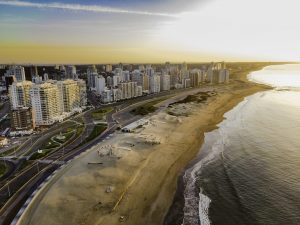
If you’re fleeing war or looking for a quiet and very liberal place to live a modern European-style life, Uruguay is a promised land for you.
On the other hand, if you’re a digital nomad and need to move constantly, then Paraguayan permanent residency is more suitable and flexible for you (unlike Uruguay, Paraguay makes you a tax resident immediately, without any physical presence requirement).
Pingback: Get Uruguayan permanent residency directly in 1-2 visits – Liberation Travel